What Is an eQMS? Electronic Quality Management Systems

If your quality team is managing SOPs in SharePoint, tracking CAPAs in spreadsheets, and chasing training sign-offs by email, you already have a quality management system of sorts. It just happens to be one that is slow, fragile, and nearly impossible to audit with any real confidence.
An electronic Quality Management System (eQMS) replaces that patchwork with something built for purpose. It gives you a single, controlled environment where your quality processes actually live, your compliance evidence stays current, and your next audit is something you can walk into calmly rather than scramble for.
This guide explains what an eQMS is, what it actually does day to day, who genuinely needs one, and what to look for when you start comparing options.
What Is an eQMS?
An eQMS, short for electronic Quality Management System, is software that digitises and manages the processes, documents, and records that make up a company’s quality system.
A traditional QMS, whether fully paper-based or cobbled together from shared drives and spreadsheets, relies heavily on manual effort to stay consistent. An eQMS brings everything into one platform with proper controls built in: version management, approval workflows, audit trails, electronic signatures, and real-time visibility across your entire quality programme.
For manufacturers in regulated industries like medical devices, pharmaceuticals, electronics, aerospace, and defence, an eQMS is not just a productivity upgrade. It is the infrastructure that makes regulatory compliance genuinely achievable at scale.
The “e” in eQMS is worth thinking about more carefully than most people do. Going electronic is not simply about ditching the paper binders. A properly implemented eQMS enforces compliance by design. It stops unapproved documents from reaching the production floor, routes every change through the right review process, captures signatures in a legally valid way, and makes your entire quality record searchable and auditable within seconds.
What Does an eQMS Manage?
A quality management system covers a surprisingly broad range of processes. An eQMS brings all of them into one controlled environment. Here is what a comprehensive platform typically handles:
Document Control
This is the foundation of any QMS. An eQMS manages the full lifecycle of your controlled documents, including SOPs, work instructions, forms, and policies, from creation and review through approval, distribution, and eventual obsolescence. Every version is tracked and every change is recorded. Nothing reaches the shop floor or your supply chain without clearing the approval process first.
CAPA Management (Corrective and Preventive Actions)
When something goes wrong, whether that is a nonconformity, a customer complaint, or a failed inspection, a CAPA gets initiated to dig into root causes and put fixes in place. An eQMS structures this entire process, making sure CAPAs are properly assigned, tracked, escalated when needed, and closed out with solid evidence that the fix actually worked.
Nonconformance and Deviation Management
This covers recording and managing situations where a product, process, or material falls outside its specified requirements. An eQMS connects each nonconformance to the relevant product, batch, or supplier and links it through to CAPA wherever that is required.
Audit Management
Planning internal audits, scheduling them, assigning auditors, capturing findings, and following through on closure of actions. An eQMS makes your audit programme visible and repeatable, and it gives you a clean, organised record to present when external auditors or notified bodies come calling.
Training Records and Competency Management
Under ISO 13485 and similar standards, you need to demonstrate that the people doing quality-critical work are actually qualified to do it. An eQMS tracks which employees have completed which training, automatically assigns new training tasks when procedures get updated, and flags any gaps before they turn into audit findings.
Risk Management
For medical device companies working under ISO 14971, and increasingly for other regulated manufacturers too, risk management needs to be documented, traceable, and connected to real product decisions. An eQMS gives you the structure to manage risk files and link risk assessments directly to design and process records.
Supplier Quality Management
This covers qualifying suppliers, running supplier audits, maintaining approved vendor lists, and handling any nonconformances that involve the supply chain. An eQMS builds a controlled, auditable record of all your supplier quality activity, which becomes especially important when your supply base is complex or spread across multiple countries.
Complaint Handling
Receiving, logging, investigating, and responding to customer complaints in a structured and traceable way. For medical device companies, this connects directly to post-market surveillance obligations under EU MDR and FDA requirements.
Change Control
Managing requests to change controlled documents, processes, or products. An eQMS makes sure changes are assessed properly for impact, approved by the right people, and communicated to everyone affected, all before anything actually changes in production.
eQMS vs Paper-Based QMS: The Real Difference
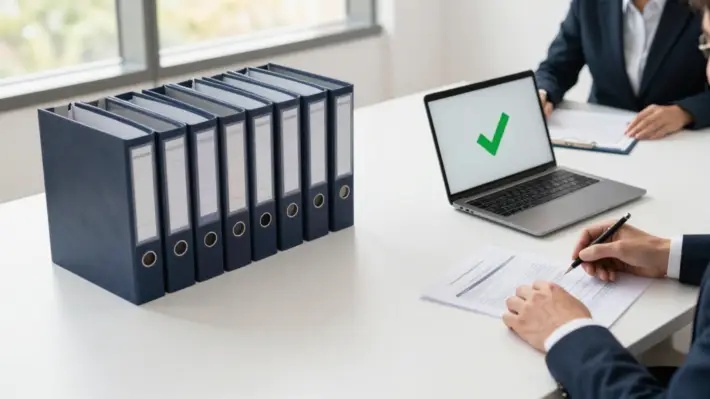
A lot of companies operate what they think of as a hybrid system. Some documents live in a shared drive, some processes get tracked in spreadsheets, approvals come through on email, and training records sit in somebody’s inbox. This feels manageable on a normal Tuesday. It stops feeling manageable the moment an auditor sits down and asks for evidence.
Here is how the two approaches actually compare:
| Capability | Paper / Hybrid QMS | eQMS |
|---|---|---|
| Document version control | Manual, error-prone | Automatic, enforced |
| Approval workflows | Email chains | Structured, trackable |
| Audit trail | Incomplete or non-existent | Built-in and tamper-proof |
| Training records | Spreadsheets, paper sign-offs | Linked to documents, auto-assigned |
| CAPA tracking | Spreadsheets, status unknown | End-to-end workflow with deadlines |
| Audit readiness | Weeks of preparation | Continuous |
| Electronic signatures | Scanned or absent | Legally valid, 21 CFR Part 11 compliant |
| Remote access | Limited | Full, from any location |
The real cost of a paper-based QMS is not just the hours it wastes. It is the risk it quietly accumulates: nonconformances that go undetected, training gaps that turn into audit findings, CAPAs that stall because nobody is sure who owns them, and a compliance status that no one in the business can honestly confirm at any given moment.
Who Needs an eQMS?
An eQMS is most important for companies in regulated industries where quality documentation and process compliance are subject to external audit or regulatory scrutiny. That includes:
Medical device companies working under ISO 13485:2016, EU MDR 2017/745, or FDA 21 CFR Part 820. These regulations require documented quality systems with full traceability from design all the way through to post-market surveillance. An eQMS gives you a practical foundation for meeting these requirements without needing a large team of dedicated quality administrators to keep it all together.
Electronics and high-tech manufacturers dealing with rising customer quality demands, IPC standards, supplier qualification requirements, and the operational cost of poor quality in the form of rework, scrap, and product returns.
Defence contractors working under AS9100 Rev D or AQAP standards, where configuration control, document management, and audit readiness are not optional extras but baseline requirements for participating in any serious programme.
Any manufacturer that is growing beyond a small team. At 10 people, a shared drive might just about hold things together. At 50, the cracks start to show. At 100 or more, a manual QMS becomes a genuine risk to the business.
If your company is approaching a regulatory submission, getting ready for a customer audit, pursuing ISO certification, or finding that the same quality issues keep resurfacing despite repeated attempts to fix them, an eQMS is not a nice-to-have. It is the foundation that makes it possible to actually solve these problems rather than just manage them.
What About PLM? Do You Need Both?
Not necessarily, and that is an important point. eQMS and PLM solve different problems. An eQMS focuses on quality processes: document control, CAPAs, audits, training, and compliance. PLM focuses on product data: BOMs, engineering changes, revision control, and design-to-manufacture handovers. Some companies need both. Many start with one and expand later. Some only ever need one of them.
The right answer depends entirely on where your biggest pain is right now.
If your most pressing problem is audit readiness, compliance gaps, or CAPA management, start with eQMS. If it is BOM chaos, version confusion, or slow engineering handovers, start with PLM. There is no requirement to buy both, and buying more than you need on day one rarely works out well.
What does matter is that if your needs grow and you eventually want both to work together, you should not have to switch vendors, migrate data, or start from scratch to make that happen. Highstage offers eQMS and PLM as separate products that sit on the same platform. You start with what you need today, and if the time comes to expand, everything connects without friction. No new vendor, no painful integration project, no retraining your team on a different system.
That flexibility is worth thinking about early, even if you only plan to use one product for now.
What to Look for in an eQMS
Not all eQMS platforms are built with the same buyer in mind. Here is what genuinely matters when you are evaluating options:
Regulatory fit. Does the platform actually support the specific standards you work to? For medical devices, that means ISO 13485, EU MDR, and 21 CFR Part 11 compliance for electronic signatures and audit trails. For defence, it means the system understands long change cycles and the demands of configuration control.
Fast deployment. Traditional enterprise quality systems have a well-earned reputation for 12 to 18 month implementations. For most SME manufacturers, that timeline is simply not realistic. Look for a system that can be up and running in days or weeks, not the better part of a year.
Ease of adoption. Quality systems quietly fail when people find ways to work around them. If the system is cumbersome to use, your engineers and technicians will route around it, and you will end up with the same compliance gaps you started with. The system should make doing the right thing easier than not doing it.
Modular flexibility. You probably do not need every module from day one. A well-designed eQMS lets you start with document control and CAPA management, then bring in audit management, training records, and supplier quality as your programme matures, all within the same platform.
Connection to product data. Quality does not exist separately from your products. If your eQMS has no link to your PLM or product records, you will always have a traceability gap somewhere. That gap will eventually surface in an audit or an investigation.
Audit trail integrity. This one is non-negotiable. Every action in the system, every document approval, every signature, every change, must be recorded with a timestamp and user identity that cannot be altered. That is both a compliance requirement and a practical safeguard for the business.
eQMS at Highstage: Built for Product Manufacturers
Highstage is a purpose-built management system that combines eQMS and PLM capability for companies in medical devices, electronics, and defence. Rather than running a quality system alongside your product data system and hoping the two stay roughly in sync, Highstage connects them from the ground up.
With Highstage, quality teams get:
- Document control with FDA 21 CFR Part 11 compliant electronic signatures
- Full audit trails built in, with no manual record-keeping required
- CAPA and nonconformance management linked directly to product records
- Audit management that keeps you inspection-ready at all times
- Training and competency tracking tied to document revisions
- Supplier qualification and approved vendor management
- Risk management connected to your Design History File
Our customers eliminate 40% of compliance-related errors, run audits twice as fast, and save 50% of the time they previously spent on quality reporting.
Highstage is deployed in days, not months, and it scales as your quality programme grows without needing to move to a different platform.
Summary: What You Need to Know About eQMS
An electronic Quality Management System is the infrastructure that makes quality management reliable, auditable, and something that can actually scale with your business. It replaces the spreadsheets, email chains, and shared drives that most companies rely on today, the same ones that most experienced auditors can see through in minutes.
For regulated manufacturers, it is the foundation of compliance readiness. For any product company dealing with recurring quality issues, slow CAPA cycles, or an upcoming certification, it is the system that shifts you from firefighting to building a quality culture that genuinely holds up over time.
The best eQMS platforms do not just digitise what you already do. They give your processes proper structure, so the right things happen in the right order, with the right evidence behind them, every time.
Want to see how Highstage handles eQMS for your industry?
Book a demo or contact our team to talk through your specific quality management needs.
Related reading:
- Why Compliance Chaos Hurts Electronics Manufacturers?
- PLM for All vs. Industry-Specific PLM: Choosing the Right Approach
- Universal vs. Industry-Specific PLM Software: Which Solution Delivers the Best ROI in 2025
- Impact on Innovation: Does PLM Stifle or Stimulate Creativity?
- Ease of Use vs. Feature Overload in PLM Systems